Professional Basic Life Support Courses
.png)

Professional Basic Life Support Courses
When someone collapses and stops breathing, the first three minutes determine whether they survive with their brain intact, suffer permanent damage, or don't make it at all. Most cardiac arrests in the UK happen outside hospitals, which means bystanders—colleagues, teachers, shop workers—become the difference between life and death.
This guide covers what basic life support training involves, who needs it, how to choose a provider that delivers genuine skills rather than just compliance certificates, and what UK regulations actually require from different workplaces.
What Is Basic Life Support Training
Basic life support (BLS) training teaches you how to respond when someone stops breathing or their heart stops beating. The course covers CPR (cardiopulmonary resuscitation), how to use an automated external defibrillator (AED), and what to do when someone is choking. Unlike general first aid that addresses cuts, burns, or sprains, BLS focuses specifically on keeping someone alive until paramedics arrive.
The training follows guidelines from the Resuscitation Council UK, which reviews international research every five years to determine what actually works in cardiac emergencies. Most courses run three to four hours and include hands-on practice with training manikins and AED simulators. You're not just learning steps from a manual—you're building the muscle memory that kicks in when someone collapses in front of you.
Who Needs Basic Life Support Training In The UK
Healthcare workers face the clearest requirement for BLS certification. Doctors, nurses, dental staff, and care home workers typically renew their training annually to maintain their professional registration and meet Care Quality Commission standards.
Beyond healthcare, though, plenty of other workplaces benefit from having trained staff on site:
- Teachers and childcare workers: Responsible for children who might choke on food or experience sudden cardiac events
- Office managers: Accountable for workplace safety that extends beyond fire drills
- Retail and hospitality teams: Serving public customers in environments where medical emergencies happen without warning
The Health and Safety Executive doesn't mandate BLS for every UK workplace, but employers have a general duty to assess risks and provide appropriate safety measures. For many organisations, that means ensuring at least some team members can respond to life-threatening emergencies.
Skills Covered In A Professional BLS Course
A comprehensive BLS course teaches five core competencies that work together during cardiac or breathing emergencies.
Adult CPR
You'll learn where to place your hands on someone's chest, how deep to press (5-6 centimetres), and how fast to compress (100-120 times per minute). Current UK guidelines recommend 30 compressions followed by 2 rescue breaths, though compression-only CPR is better than doing nothing if you're uncomfortable giving breaths. The physical practice matters here—quality CPR is surprisingly tiring, and you won't know what effective compressions feel like until you've tried them on a manikin.
Automated External Defibrillation
Modern AEDs talk you through each step, but training removes the hesitation that delays treatment. You'll practice turning on the device, placing electrode pads on someone's bare chest, and making sure everyone steps back during the shock. The course also covers how to switch between using the AED and performing CPR, since defibrillation works best when combined with chest compressions.
Infant And Child Resuscitation
Children aren't small adults—their bodies require different techniques. For babies under one year, you use two fingers for compressions instead of the heel of your hand, and you don't press as deep (about 4 centimetres). Opening their airway differs too, since tilting an infant's head back too far can actually block their breathing passage. The course walks you through these age-specific adjustments so you can respond appropriately whether you're helping an adult colleague or a child.
Choking Response
You'll learn to spot the difference between mild choking (the person can still cough and speak) and severe choking (they cannot). For conscious adults and children, the protocol involves five back blows between the shoulder blades, then five abdominal thrusts just above the navel, repeated until the object comes out. Infant choking requires back blows and chest thrusts instead, since abdominal thrusts could damage their internal organs.
Recovery Position And Post-Resuscitation Care
Once someone starts breathing normally again, you'll place them on their side in the recovery position to keep their airway open and prevent choking if they vomit. The course teaches how to roll someone safely while protecting their spine, and how to monitor their breathing and consciousness until the ambulance arrives. You'll also learn what information paramedics need when they take over.
UK Regulations And Certification Requirements
The Resuscitation Council UK publishes the evidence-based guidelines that define BLS training standards across the country. When you're choosing a training provider, you'll want to confirm their course content aligns with these current guidelines, which get updated every five years based on the latest resuscitation research.
The Health and Safety Executive doesn't specify exact certification requirements for most workplaces—they expect employers to assess their specific risks and provide appropriate training. Healthcare settings face clearer expectations, though. The Care Quality Commission and professional regulatory bodies typically require annual BLS refresher training as a minimum standard.
Certificate validity periods vary by awarding body and workplace:
Your specific role determines which certification level you need. A receptionist might meet their employer's requirements with a three-year certificate, while a healthcare assistant working in a hospital would renew annually as a condition of employment.
Course Duration Cost And Renewal Cycles
Most BLS courses run three to four hours, though some providers offer shorter two-hour sessions covering just adult CPR and AED use. The duration depends on how many age groups you're covering (adult, child, infant) and whether the course includes additional topics like anaphylaxis awareness.
Group pricing typically offers better value than individual bookings. Many providers charge a flat rate for up to 12 participants, which makes sense when you're paying for the trainer's time rather than per person. On-site training at your workplace costs more than attending a public course at the provider's venue, but it eliminates travel time and keeps your team together.
Renewal cycles depend on your certification body and workplace policy. Healthcare workers generally retrain annually, while other sectors might opt for two or three-year refreshers. Skills fade without practice, though, so many organisations choose annual updates even when longer intervals would technically meet compliance requirements.
Tip: Ask whether certification fees are included in the quoted price or charged separately. Some providers also charge for certificate replacement if yours gets lost.
Delivery Formats On-Site Online And Blended
The format you choose affects both what you learn and the certification you receive.
Face-To-Face Workplace Sessions
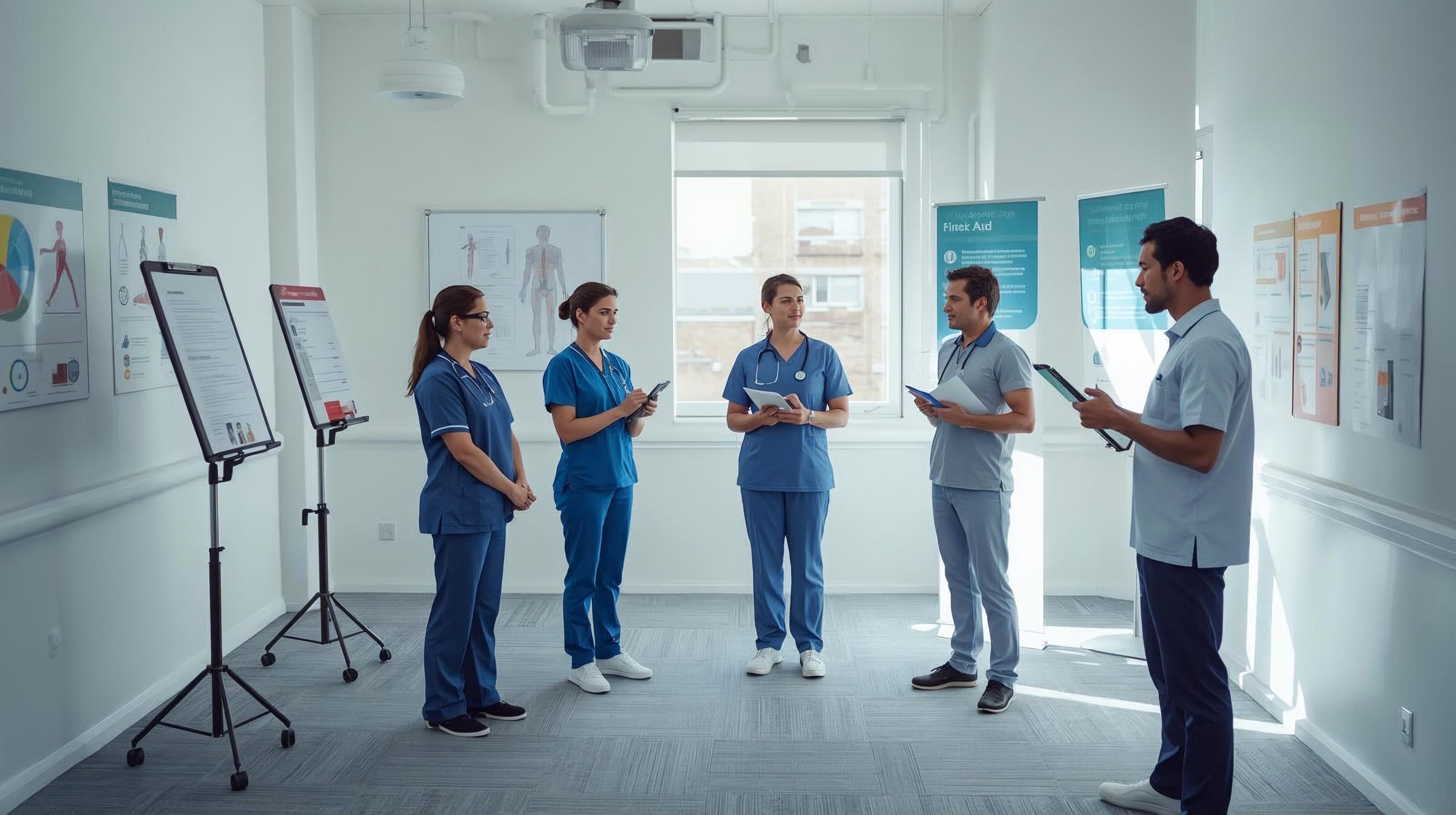
Traditional classroom training brings an instructor to your workplace with training manikins and practice AEDs. This approach offers immediate feedback—the instructor watches your hand position during compressions and corrects issues before they become habits. Your team also trains together, which builds confidence since you'll support each other during real emergencies.
Kasorb delivers on-site training with instructors who've worked as paramedics, ER nurses, and emergency responders. Rather than teaching from a textbook, they share insights from actual cardiac arrests they've managed, which helps you understand not just what to do, but why each step matters.
Fully Online Theory With Practical Assessment
Some providers offer e-learning modules covering the theoretical components—when to start CPR, how an AED works, the science behind each technique. This flexibility suits people with unpredictable schedules, but you cannot receive full BLS certification without demonstrating practical skills in person. The Resuscitation Council UK and most employers require proof that you can actually perform the techniques, not just describe them.
Blended Learning Models
Blended approaches combine online theory modules with shorter face-to-face practical assessments. You complete the knowledge components at your own pace, then attend a condensed session where an instructor verifies your hands-on skills. This format reduces time away from regular duties while still ensuring proper competency verification.
How To Choose A Reputable BLS Provider
Selecting the right training provider determines whether your team gains genuine life-saving skills or just ticks a compliance box.
Accreditation And Instructor Credentials
Look for courses approved by recognised bodies like the Resuscitation Council UK, British Red Cross, or Highfield Qualifications. Beyond organisational approval, though, consider the instructors' backgrounds. Former paramedics and emergency nurses bring experience that purely academic instructors cannot match—they've performed these skills under pressure and can share what managing a cardiac arrest actually involves, not just the textbook version.
Customisation To Workplace Risks
Generic courses teach valuable skills, but training tailored to your environment improves retention and confidence. A care home faces different scenarios than a construction site or primary school. The best providers take time to understand your workplace risks and build relevant scenarios into the practical sessions.
Certification Turnaround Time
Some providers take weeks to process and post certificates, which creates compliance gaps when someone needs immediate proof of training. Same-day certificate provision—either physical or digital—keeps your records current without administrative delays. This matters particularly in healthcare settings where auditors might request evidence of staff training at short notice.
Group Pricing And Flexibility
Flat-rate pricing for groups removes the complexity of calculating per-person costs and makes budgeting straightforward. You'll also want a provider who can accommodate your schedule, whether that means early morning sessions before your business opens or weekend courses that don't disrupt operations.
Benefits Of Group Basic Life Support Training With Kasorb
Kasorb's approach centres on practical, workplace-specific scenarios delivered by instructors with genuine emergency service experience. Rather than rushing through a standardised script, our trainers adapt sessions to the actual risks your team faces—cardiac events in an ageing workforce, potential choking incidents in a school dining hall, or emergencies in public-facing retail environments.
The flat group rate for up to 12 people means you can train your entire team without escalating per-person costs. You'll receive Resuscitation Council UK-aligned training that meets regulatory requirements, with same-day certification that keeps compliance records current. Perhaps most importantly, participants leave with genuine confidence in their ability to respond effectively, not just a certificate for the filing cabinet.
Since 2010, we've trained over 300,000 people across the UK, working with everyone from small businesses to major NHS trusts. Our instructors don't just teach the techniques—they explain the reasoning behind each step, drawing on their frontline experience to help your team understand what actually happens during a cardiac arrest.
Book Training Instantly to secure your preferred date and location, or contact us to discuss how we can tailor the course to your workplace.
FAQs About Basic Life Support Training In The UK
Can we combine basic life support training with other mandatory courses?
Yes, many providers offer combined sessions that include fire safety, manual handling, or broader first aid training alongside BLS. This approach addresses multiple compliance requirements in a single visit, reducing disruption to business operations and often providing better value than booking separate courses.
Does basic life support training include paediatric CPR for non-healthcare teams?
Most comprehensive BLS courses cover infant and child resuscitation techniques alongside adult CPR, since emergencies involving children can occur in any workplace or public setting. Schools, nurseries, and leisure facilities particularly benefit from this coverage, but even office environments occasionally host visitors with children.
How do we prove ongoing competence after the initial BLS course?
Maintain your certification through regular refresher training—typically annually or every three years depending on your industry—and keep records of completion certificates. Most UK employers and regulators require evidence of current competency, so store certificates securely and note renewal dates well in advance to avoid compliance gaps.


Book a free 15-min consult call with us. We’ll help you get your mandatory training done right.