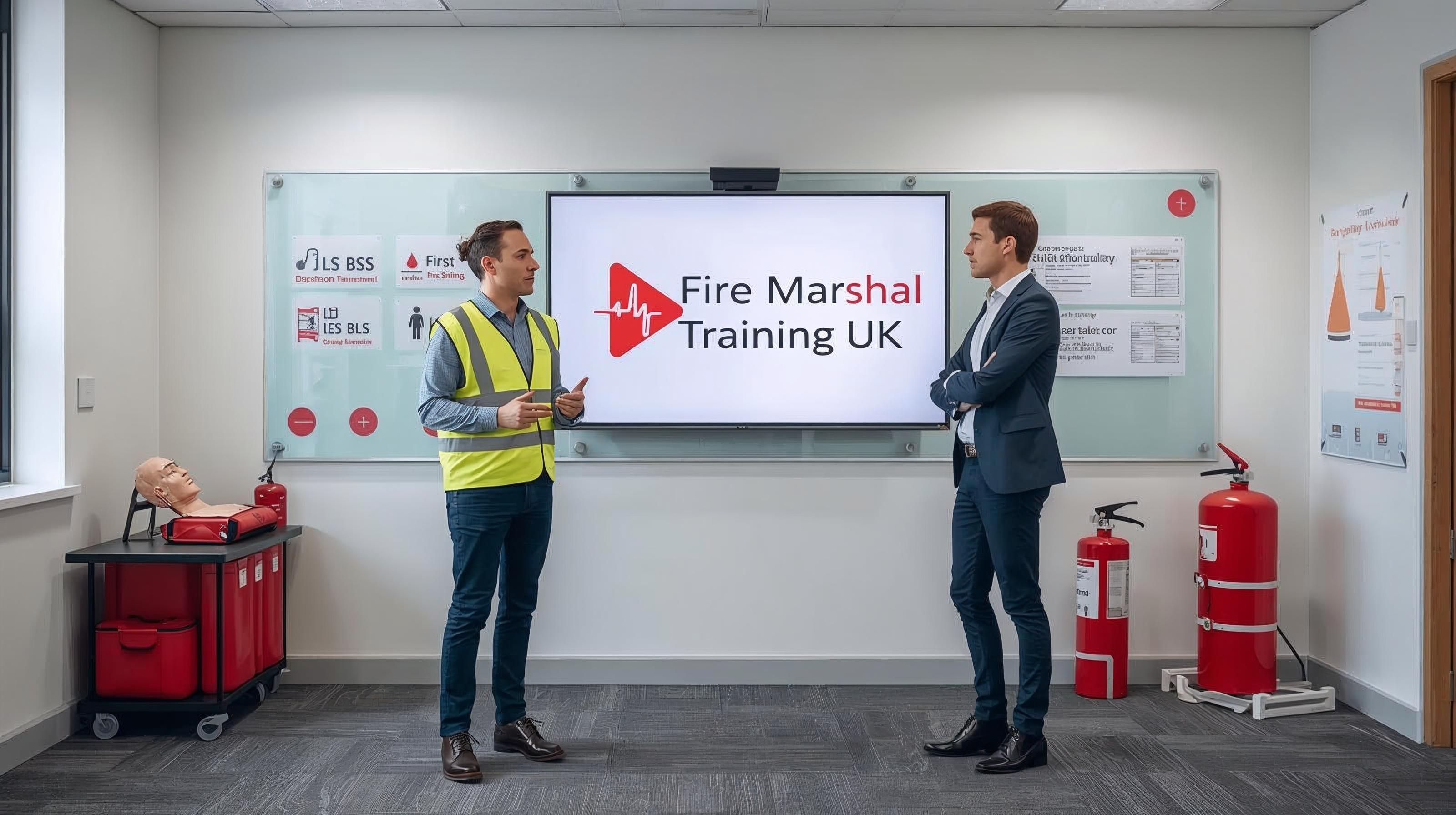
Emergency First Aid at Work Training Course UK


Emergency First Aid at Work Training Course UK
When someone collapses at work or starts choking in the break room, the first few minutes determine whether they survive with minimal harm or face serious complications. Most workplaces in the UK are legally required to have trained first aiders on staff, yet many employers struggle to choose the right course or understand what their teams actually need to learn.
Emergency First Aid at Work (EFAW) is a one-day certification course that teaches employees how to respond to common workplace emergencies including cardiac arrest, severe bleeding, choking, and unconsciousness. This guide covers what the course includes, who should attend, how it differs from other first aid qualifications, and how to select training that builds real confidence rather than just ticking a compliance box.
What is Emergency First Aid at Work
Emergency First Aid at Work (EFAW) is a one-day training course that teaches you how to respond to common workplace emergencies like cardiac arrest, severe bleeding, and choking. The course runs for six hours and covers essential life-saving skills including CPR, using an automated external defibrillator (AED), and managing unconscious casualties. Once you complete the training, your certification stays valid for three years and meets the Health and Safety Executive's minimum requirements for workplace first aiders in low-risk environments.
You can take the course in three different ways: face-to-face at a training center, on-site at your workplace, or through blended learning that combines online modules with hands-on practice. Anyone aged 16 or over can attend, and you don't need any medical background or special qualifications. The training focuses on building practical skills rather than memorizing medical theory, so you'll spend most of your time practicing techniques on training manikins and working through realistic scenarios.
EFAW or FAW how to choose the right course
The main difference between Emergency First Aid at Work and First Aid at Work (FAW) comes down to how risky your workplace is. EFAW works well for offices, shops, and other low-risk settings where serious injuries are unlikely. FAW, on the other hand, is designed for warehouses, construction sites, and manufacturing plants where workers face higher risks.
The time commitment tells you a lot about what each course covers. EFAW takes one day to complete, while FAW requires three full days of training. That extra time in FAW covers advanced topics like spinal injuries, fractures, and anaphylaxis—situations you're more likely to encounter in high-risk environments. If your workplace has significant hazards or you employ more than 50 people even in a low-risk setting, FAW becomes the better choice.
Your decision starts with a workplace risk assessment. This assessment looks at what kind of work you do, how many people you employ, your working arrangements, and whether you've had accidents in the past. The HSE provides guidance on conducting this assessment, though many organizations find it helpful to consult with training providers who can evaluate their specific situation.
Here's how the courses compare:
- EFAW: One day, lower cost, covers essential emergency skills, suitable for offices and retail
- FAW: Three days, higher cost, includes advanced injury management, required for higher-risk workplaces
Legal requirements for first aiders in the UK
The Health and Safety (First-Aid) Regulations 1981 require employers to provide adequate equipment, facilities, and trained personnel so employees can get immediate help if they're injured or become ill at work. What counts as "adequate" varies depending on your workplace, which is why the HSE requires you to conduct a first aid needs assessment before deciding how many first aiders to train.
This assessment determines both the number of first aiders you need and what level of training they require. A small office with minimal risks might only need an appointed person with basic first aid awareness, while a larger organization or one with higher risks will need multiple people with EFAW or FAW certification. The HSE doesn't set exact ratios because a construction site with 20 workers faces different risks than an office with 200 employees.
You'll also want to think about shift patterns, employees who work alone, staff who travel frequently, and members of the public who visit your premises. Your first aid coverage needs to extend across all working hours, which might mean training several first aiders across different shifts.
Who should attend an Emergency First Aid at Work course
Designated workplace first aiders are the primary people who attend EFAW training, particularly in offices, retail stores, and other low-risk environments. However, any employee who wants to learn potentially life-saving skills can benefit from the course, even if they're not formally appointed as a first aider.
You don't need medical knowledge, specific qualifications, or a particular fitness level to complete the course successfully. The training is accessible to people from all backgrounds and industries. That said, you'll be practicing CPR on the floor and applying bandages, so you'll want to be physically capable of these activities—though trainers can adapt exercises if you have mobility limitations.
Managers and supervisors often find EFAW training valuable because it helps them recognize their responsibilities for workplace safety and respond confidently when emergencies happen. Similarly, employees who work in isolated areas, on different floors, or in satellite offices make excellent candidates since they might be the first—or only—person available when an incident occurs.
Emergency First Aid at Work course content
The EFAW curriculum focuses on practical skills for managing common workplace emergencies from the moment they happen until paramedics arrive. Rather than overwhelming you with medical terminology, the course emphasizes techniques you'll actually use in real situations.
Primary survey and incident management
You'll learn how to assess a scene for safety before approaching someone who's injured, protecting both yourself and others from additional harm. The primary survey teaches you to check for dangers, assess whether someone is responsive, and systematically evaluate their condition using the DR ABC approach—Danger, Response, Airway, Breathing, Circulation. This structured method helps you stay calm and work methodically during stressful situations.
The training also covers how to call emergency services effectively, giving dispatchers the precise information they need to send appropriate help. You'll practice managing situations with multiple casualties, understanding how to prioritize treatment when more than one person is injured.
CPR and AED use
Cardiopulmonary resuscitation forms a cornerstone of the course, with extensive hands-on practice using training manikins. You'll learn the correct hand position, compression depth, and rhythm for adult CPR, along with when to start and stop resuscitation attempts. The training includes both CPR with rescue breaths and compression-only CPR, acknowledging that some first aiders may prefer the compression-only approach in certain situations.
Automated external defibrillator training shows you how straightforward these devices are to use when someone suffers a cardiac arrest. You'll practice applying the pads correctly, following the device's voice prompts, and continuing CPR between shocks. Modern AEDs are designed for use by people without medical training, and the course builds your confidence in using them without hesitation.
Managing unconscious casualties
When someone is unconscious but breathing, placing them in the recovery position protects their airway and prevents choking. You'll practice this technique multiple times, learning how to roll casualties safely and position them correctly. The training emphasizes continuous monitoring since an unconscious person's condition can deteriorate quickly.
You'll also learn to recognize signs that someone's condition is worsening, such as changes in breathing patterns, skin color, or responsiveness. This knowledge helps you provide accurate updates to emergency services and take appropriate action if the situation changes.
Control of bleeding and shock
Severe bleeding requires immediate action, and you'll learn how to apply direct pressure effectively using appropriate dressings. The course covers different types of wounds and the best approaches for each, from small cuts to more serious injuries involving significant blood loss. You'll practice applying pressure, elevating injured limbs, and securing dressings that stay in place.
Shock often accompanies serious injuries, and recognizing its signs early can be crucial. The training explains how to identify shock symptoms—pale, cold, clammy skin, rapid pulse, and confusion—and what steps to take while waiting for paramedics.
Choking and minor injuries
Choking is one of the most common workplace emergencies, particularly in settings with kitchens or dining areas. You'll learn to distinguish between mild and severe choking, practice back blows and abdominal thrusts, and understand when to call for emergency help. The training covers both conscious and unconscious choking casualties.
Minor injury management includes treating small cuts, grazes, burns, and scalds—the everyday incidents that happen in most workplaces. While these aren't life-threatening, knowing how to clean and dress wounds properly prevents infection and promotes healing.
Benefits of a hands-on Emergency First Aid at Work course
Practical, scenario-based training builds confidence in a way that reading or watching videos alone never can. When you've physically practiced CPR, applied bandages, and worked through realistic emergencies, you're far more likely to act decisively when a real incident occurs. This muscle memory and experiential learning makes the difference between hesitation and effective intervention.
Kasorb's approach emphasizes real-world scenarios tailored to your specific workplace environment. Our trainers—including paramedics, ER nurses, and NHS professionals—bring frontline experience to every session, sharing insights from actual emergencies they've managed. This perspective helps you understand not just what to do, but why certain techniques work and how to adapt them to different situations.
Assessment certification and renewal
EFAW courses use continuous assessment rather than formal written exams, with trainers observing your practical skills throughout the day. This approach reduces anxiety and focuses on demonstrating competence in the techniques that matter most. You'll receive feedback as you practice, allowing you to refine your skills before the end of the course.
To achieve certification, you'll demonstrate proficiency in key areas including CPR, recovery position, and bleeding control. The assessment is practical and realistic, often involving scenario-based exercises where you respond to simulated emergencies.
Your EFAW certificate remains valid for three years, after which you'll requalify by attending another full course. However, the HSE strongly recommends annual refresher training to maintain and update your skills, as first aid techniques evolve and skills fade without regular practice.
On-site training and flat group pricing explained
On-site training brings the course directly to your workplace, eliminating travel time and costs while allowing you to train multiple team members simultaneously. This approach proves particularly cost-effective for organizations needing to certify several first aiders, as you'll pay a flat group rate for up to 12 participants rather than individual fees for public courses.
Training at your own premises offers another significant advantage—scenarios can be tailored to your actual workplace environment and specific risks. Your team practices responding to emergencies in the spaces where they'll actually occur, using your first aid equipment and following your emergency procedures.
The flat group pricing model means your cost per person decreases as you add participants, making it economical to train more staff than the bare minimum required by regulations. Having additional qualified first aiders provides better coverage during holidays, sickness, and busy periods.
How Kasorb customizes EFAW for your workplace risks
Every workplace faces unique risks, and generic first aid training often misses the specific scenarios your team might actually encounter. Kasorb's trainers conduct a thorough review of your workplace before designing the course, identifying the types of incidents most likely to occur in your environment. An office might focus more on cardiac events and trips, while a retail setting might emphasize customer-related emergencies and manual handling injuries.
Our trainers bring extensive frontline experience from emergency medicine, allowing them to share relevant case studies and insights that resonate with your team. A paramedic who's responded to thousands of workplace emergencies can explain not just the textbook approach, but the practical realities of managing incidents in real-world conditions.
The customization extends to the scenarios used during practical exercises, which we base on your actual workplace layout, equipment, and typical activities. If your team works with specific machinery, chemicals, or in particular environments, we'll incorporate these elements into the training.
Frequently Asked Questions About Emergency First Aid at Work
How many people can one EFAW trainer teach at once?
The maximum is 12 participants per trainer to maintain the quality of hands-on practice and ensure everyone receives adequate individual attention during practical exercises. Smaller groups allow for more personalized feedback, though groups of 8-12 people work well for most organizations as they enable realistic multi-casualty scenarios while keeping costs manageable.
Can EFAW training be delivered at weekends or evenings?
Yes, flexible scheduling includes weekends and evenings to minimize disruption to normal business operations. Many organizations prefer weekend training to avoid taking staff away from their regular duties, while shift-based businesses often opt for evening sessions that work better with their schedules.
Will the emergency first aid at work course cover tourniquets and advanced bleeding control?
EFAW covers fundamental bleeding control using direct pressure and appropriate dressings, which handles the vast majority of workplace bleeding incidents. Tourniquets and other advanced techniques are typically reserved for the full First Aid at Work course, as they're more relevant to higher-risk environments and require additional training to apply safely.
Can the training count toward CPD hours?
Yes, EFAW certification contributes to continuing professional development requirements for healthcare professionals, safety officers, and many other roles. The course provides six hours of CPD, and certificates include details that satisfy most professional body requirements for documented learning activities.
Is blended learning accepted by HSE for emergency first aid at work training?
HSE regulations require face-to-face practical assessment for EFAW certification, though some theory elements can be delivered through online modules as part of a blended approach. The practical session occurs in person with a qualified trainer who can observe and assess your competence in essential techniques like CPR and bleeding control.
Ready to protect your team book training instantly
Book your Emergency First Aid at Work course now with flexible scheduling, on-site delivery, and flat group rates for up to 12 participants.


Book a free 15-min consult call with us. We’ll help you get your mandatory training done right.